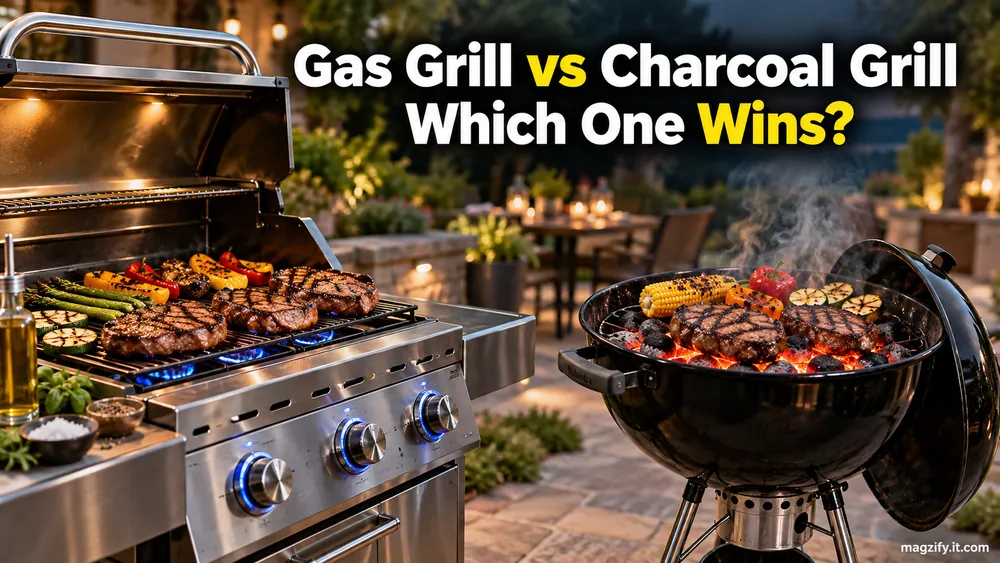
It’s 6:30 on a Tuesday. The kids are hungry, and you’re staring at a bag of charcoal and a propane tank. One promises smoky flavor. The other promises dinner without a long wait. Which grill fits your life?
For most households, a gas grill is the practical choice. It starts easily, holds a steady temperature, and creates less mess. Charcoal is better when deep smoke flavor and hands-on cooking matter most.
That choice can feel surprisingly personal. Nobody wants to spend hundreds of dollars on a grill that gathers dust. You may also worry about flare-ups, smoke, food safety, or running out of propane halfway through dinner.
This gas grill vs charcoal grill guide compares the details that matter. That includes flavor, cost, convenience, health, safety, maintenance, and space.
The honest verdict is: Choose a gas grill for busy weeknights, precise temperature control, easy cleanup, and beginner-friendly cooking. Choose charcoal for smoky flavor, intense searing heat, and a slower weekend ritual. Most households should buy gas first. If flavor is your top priority and you enjoy tending a fire, buy charcoal or consider a pellet or hybrid grill.
Gas grill vs charcoal grill at a glance
Gas wins for speed and control, while charcoal wins for smoke and searing. This table shows how each option performs in everyday use.
| Criteria | Gas grill | Charcoal grill | Better fit |
|---|---|---|---|
| Startup | Ignites with a control knob and preheats without handling fuel | Requires lighting coals and arranging them before cooking | Gas |
| Temperature control | Burners adjust with separate control knobs | Heat changes through vents, coal amount, and coal placement | Gas |
| Flavor | Clean grilled flavor with optional wood smoke | Stronger smoke and fire-roasted flavor | Charcoal |
| Searing | Strong on models with focused sear burners | Coals can be piled close to the grate for intense heat | Charcoal |
| Entry price | More burners, valves, and hardware raise the purchase price | Basic kettle models use fewer mechanical parts | Charcoal |
| Fuel routine | Propane tank refill or a fixed natural gas line | A fresh supply of briquettes or lump charcoal | Gas for frequent cooking |
| Cleanup | Grease tray, grates, burners, and cooking chamber | Ash, grates, bowl, and vents | Gas |
| Smoke exposure | Less smoke when grease and flare-ups are controlled | More smoke from fuel and dripping fat | Gas |
| Portability | Portable models need a propane cylinder | Small kettles travel without a tank or hose | Charcoal |
| Repair needs | Burners, igniters, hoses, and regulators may need replacement | Grates, vents, and ash catchers are common replacement parts | Charcoal for simplicity |
| Best use | Weeknight meals and mixed foods needing steady heat | Weekend barbecue, steaks, and smoke-focused cooking | Based on cooking style |
The short answer: Gas vs charcoal grill verdict
Choose gas for convenience and charcoal for flavor. Three factors usually settle the debate: how often you cook, how much time you have, and how much smoke flavor matters.
- Choose gas if you grill after work, cook several foods at once, or want easy temperature changes.
- Choose charcoal if grilling is part of the event and you enjoy building and tending a fire.
- Consider another option if open flames are restricted or you want automatic low-and-slow cooking.
Be honest about your routine. A grill that is easy to use often produces more enjoyable meals than a “perfect” grill that feels like work.
Convenience and weeknight cooking: Gas wins
A gas grill is easier to fit into a busy evening. You turn the controls, ignite the burners, preheat, and cook. Always follow the lighting order in your grill’s manual.
Startup time
Gas removes the job of lighting and arranging coals. It also lets you stop the heat when dinner is done. Charcoal keeps burning until the fuel is spent or safely extinguished.
That difference matters when everyone is hungry. It matters even more when wind or cold weather makes fire management harder.
Temperature control
Gas offers more direct temperature control. Separate burners let you create hotter and cooler areas with a few knob changes.
Charcoal control is a learned skill. You adjust the vents, move coals, and watch the fire. Wind, fuel size, and ash buildup can all change airflow.
Do not shop by BTU count alone. One BTU is the heat needed to raise one pound of water by 1°F. Grill design, heat retention, and burner layout also shape real cooking performance.
Cleanup and ash
Gas grills still need cleaning. Grease trays can overflow, ports can clog, and dirty grates can affect flavor. Yet there is no ash to scoop after each cook.
Charcoal creates hot ash that needs time to cool. It must go into a safe, noncombustible container. Never place warm ash in a plastic bin or near dry leaves.
Gas plus wood chips: Can you fake charcoal flavor?
A gas grill can produce mild wood smoke, but it will not fully copy charcoal. A smoker box holds wood chips above a burner and releases smoke as they heat.
You can also let food cook over an unlit burner while smoke moves under the closed lid. Check the grill manual first, since approved methods differ by model.
Flavor and searing: Charcoal wins with caveats
Charcoal gives food a stronger smoke and fire-roasted character. It also makes it easy to concentrate intense heat beneath a smaller cooking area.
Why charcoal tastes smoky
Charcoal is made by heating wood with little oxygen. During cooking, smoke from the fuel and vaporized drippings adds flavor to the food.
More smoke is not always better. Thick, dirty smoke can make food taste bitter. Good airflow and a clean fire matter.
High-heat searing and steakhouse crust
Charcoal is excellent for a dark, crisp crust. Piling hot coals near the grate creates concentrated heat. That heat drives browning known as the Maillard reaction.
Still, the darkest surface is not always the safest or tastiest. Avoid burning meat until it is black. Move food away from flare-ups before fat feeds the flames.
Gas grill searing and smoker boxes
Gas can sear well when the grill has strong heat retention and a useful burner layout. Preheat the grate, dry the food’s surface, and avoid crowding.
A dedicated sear burner may help, but it is not required. A heavy grate and good heat distribution can matter more than a large BTU number.
Pellet grills: The middle ground
A pellet grill combines wood smoke with automatic temperature control. It feeds wood pellets through an electric auger controlled by a thermostat.
Pellet grills suit long cooks and hands-off smoking. They need electricity, have more moving parts, and may not match a close charcoal fire for intense searing.
Cost: Upfront, fuel, and long-term
Charcoal grills usually cost less to buy, while gas may suit frequent cooking better. Exact costs change by grill size, fuel prices, weather, and cooking habits.
Upfront grill cost
A basic charcoal kettle has a bowl, lid, vents, and grate. A gas grill adds burners, valves, hoses, an ignition system, and often a cabinet. That added hardware usually raises the entry price.
Premium versions of either type can cost much more. Ceramic kamados, built-in gas grills, and heavy steel smokers sit in a different price class than portable models.
Fuel cost per cook
Propane contains about 91,452 BTU per gallon. Natural gas contains about 1,037 BTU per cubic foot. Those energy figures do not translate into one universal cost per meal.
A grill’s efficiency, burner setting, cook length, and local fuel price all matter. Charcoal cost also changes with the amount and type of fuel used.
Maintenance and replacement parts
Gas owners may eventually replace burners, heat shields, igniters, regulators, or hoses. Charcoal grills have fewer mechanical parts, but grates and vents still wear out.
Parts availability can matter more than the lowest sticker price. Before buying, check whether the maker sells replacement parts for that model.
Hidden costs
- Gas: propane cylinder, refill or exchange, cover, brush, and possible assembly.
- Charcoal: chimney starter, charcoal, fire starters, ash container, and dry fuel storage.
- Both: utensils, instant-read thermometer, cover, cleaning tools, and replacement grates.
Health and safety: What the evidence says
Neither grill is automatically healthy or unhealthy. Cooking temperature, smoke, flare-ups, and food choice matter more than the label on the grill.
HCAs and PAHs: Gas vs charcoal
According to the National Cancer Institute, heterocyclic amines, or HCAs, can form when muscle meat cooks at high temperatures. This includes grilling over gas or charcoal.
Polycyclic aromatic hydrocarbons, or PAHs, can form when fat drips onto a hot surface or coals. Smoke can then deposit those compounds on food.
Charcoal may create more smoke exposure in typical use. However, a greasy gas grill with repeated flare-ups can also produce smoke and char.
Carbon monoxide and fire safety
Never use a charcoal grill indoors. The CDC warns that charcoal produces carbon monoxide, a gas you cannot see or smell. An open garage is not a safe substitute for outdoor use.
Gas grills also belong outdoors. Keep them away from walls, railings, branches, and anything that can burn. Leave the lid open while lighting unless the manual says otherwise.
Check propane connections with soapy water, never a flame. Bubbles can reveal a leak. If you smell gas, shut off the supply and move away from the grill.
How to grill healthier on either grill
Small cooking changes can reduce smoke, charring, and flare-ups. They also help food cook more evenly.
- Trim excess fat before cooking.
- Marinate meat and keep sugary sauces away from intense heat.
- Use indirect heat for thick cuts.
- Turn food often instead of letting one side burn.
- Move food when flames rise.
- Remove blackened portions before eating.
- Grill vegetables, fish, beans, and lean proteins more often.
- Clean grease and old residue from the grill.
Use a food thermometer. Cook poultry to 165°F and ground meat to 160°F. Whole cuts should reach 145°F with a three-minute rest, according to USDA guidance.
Maintenance, longevity, and storage
Simple care often decides how long a grill remains useful. Moisture, salt air, grease, and ignored rust can shorten the life of either type.
Gas grill maintenance
- Empty and clean the grease tray.
- Check burner ports for blockage.
- Inspect hoses and connections for damage.
- Remove loose debris from grates and heat shields.
- Replace deeply rusted or damaged parts.
Gas grills have more parts to inspect. The trade-off is less ash and easier shutdown after cooking.
Charcoal grill maintenance
- Remove fully cooled ash after cooking.
- Keep vents clear so air can move.
- Brush and dry the grate.
- Check the bowl and ash catcher for rust.
- Store charcoal in a dry, sealed container.
Ash holds moisture and can speed corrosion. Leaving it in the grill between rainy days is hard on metal surfaces.
Winter storage and rust prevention
Use a fitted, breathable cover. Keep water from pooling on top, and place the grill on stable ground. If possible, store removable tools and fuel in a dry area.
Do not store a propane cylinder inside a home. Follow local fire rules and the cylinder supplier’s storage guidance.
Versatility, capacity, and portability
Both grills can handle direct and indirect cooking. Gas makes zone control easier, while charcoal gives you more freedom to shape the fire.
Direct vs indirect heat
Direct heat places food over the active burner or coals. It works for burgers, thin chops, vegetables, and other foods that cook fast.
Indirect heat places food away from the active heat source. The closed grill then works more like an outdoor oven. It suits thick chicken pieces, roasts, and longer cooks.
Two-zone cooking
A two-zone setup gives food a hot side and a cooler escape area. On gas, light burners on one side. On charcoal, pile coals on one half of the grill.
Sear over direct heat, then move food to the cooler zone. This simple method helps prevent burned outsides and undercooked centers.
Apartment, balcony, and HOA restrictions
Do not assume a grill is allowed because it fits. Apartment rules, condo bylaws, fire codes, and lease terms may limit charcoal, propane, or all open flames.
Check the written rules before buying. An approved electric grill may be the safest option for a balcony or shared outdoor area.
Environmental impact
No grill fuel has zero environmental impact. Fuel production, transport, efficiency, and cooking habits all affect the result.
Emissions
Charcoal creates visible smoke and leaves ash. Gas burns more cleanly at the grill, but propane and natural gas are fossil fuels.
Frequent short cooks can also waste fuel through repeated preheating. Cook several foods during one session when practical.
Charcoal sourcing
Look for charcoal made from responsibly sourced wood. Avoid burning construction scraps or treated wood. These materials are not cooking fuel and may release harmful substances.
Gas vs electric vs pellet
Electric grills create no combustion at the cooking surface. Their wider impact depends on how local electricity is produced.
Pellet grills burn processed wood fuel and require electricity. They offer efficient temperature control, but still produce smoke and need dry pellet storage.
Persona-based recommendations: Who should buy which
Your routine should choose the grill, not grilling culture. Match the tool to the meals you will actually cook.
- Busy weeknight parent: Gas, for fast starts and easy heat changes.
- Beginner griller: Gas, for simpler temperature control.
- Weekend barbecue enthusiast: Charcoal, for smoke flavor and fire management.
- Apartment or condo dweller: Electric, or portable gas only when rules allow it.
- Health-conscious griller: Gas or electric, plus lean foods and flare-up control.
- Budget first-time buyer: A basic charcoal kettle with a stable base and lid.
- Large-family host: A gas grill with several burners and enough grate space.
- Small-space urban cook: A compact gas, charcoal, or electric model allowed by local rules.
Large families should focus on usable cooking area and burner layout. A high BTU rating alone does not guarantee even heat.
It depends: When to choose a third option
Gas and charcoal are not your only useful choices. A third option may fit your space, cooking style, or local rules better.
- Pellet grill: Best for steady heat and wood smoke with less fire tending.
- Electric grill: Best where approved outdoor power is available but open flames are restricted.
- Kamado: Best for heat retention, charcoal flavor, and long cooks.
- Portable propane: Best for camping, tailgating, and small patios where permitted.
- Indoor grill or air fryer: Best when outdoor space is unavailable.
- No grill: Sensible if you cook outdoors only a few times each year.
A combo grill can provide gas and charcoal cooking in one unit. Yet it requires more space and gives each side a smaller cooking area than many single-fuel grills.
Gas grill pros and cons
Gas is the stronger everyday tool for most households. Its main weakness is that convenience comes with more hardware and less natural smoke.
Pros
- Simple ignition and shutdown
- Easy temperature adjustments
- Good control for several food types
- No ash disposal
- Natural gas connection available on compatible models
Cons
- Usually costs more upfront than a basic charcoal grill
- Burners, hoses, valves, and igniters can wear out
- Produces less smoke flavor without added wood
- Propane can run out during a cook
- Large models can be hard to move or store
Charcoal grill pros and cons
Charcoal is ideal for cooks who value flavor and enjoy the process. It asks for more time, cleanup, and fire control.
Pros
- Strong smoke and fire-roasted flavor
- Excellent concentrated heat for searing
- Basic models have few mechanical parts
- Small kettles can be portable
- Flexible coal placement for two-zone cooking
Cons
- Requires fire lighting and vent control
- Creates ash that must cool before disposal
- Produces more smoke during typical cooking
- Heat changes take practice
- Fuel must stay dry
The Bottom Line: Match the Grill to Your Routine
Buy gas if you want to grill often with less effort. It is the better default for beginners, families, and cooks who need reliable heat after work.
Buy charcoal if smoky flavor is your first priority. It rewards patience and hands-on fire control. It also offers strong searing without complex hardware.
Still unsure? Picture your next five cookouts. If they happen on rushed evenings, choose gas. If they happen on relaxed weekends when tending the fire sounds fun, choose charcoal.
Frequently Asked Questions
Is it better to have a gas or charcoal grill?
Gas is better for fast starts, steady temperature control, and easier cleanup. Charcoal is better for strong smoke flavor and intense searing. For most households, gas is the more practical first grill.
Can a gas grill be used as a charcoal grill?
No, not unless the manufacturer designed it for both fuels. Placing charcoal inside a standard gas grill can damage burners, block airflow, and create unsafe heat. Use an approved smoker box for wood flavor or buy a combo grill.
Is it healthier to cook with gas or charcoal?
Gas may produce less smoke during normal use, but neither fuel guarantees healthier food. HCAs can form when meat cooks at high heat. PAHs can form when dripping fat creates smoke. Control flare-ups, avoid heavy charring, and grill more vegetables and lean proteins.
Why do people prefer propane over charcoal?
Propane is easy to ignite, control, and shut off. It also avoids ash cleanup and works well for short weeknight meals. Many people accept milder smoke flavor in return for that convenience.
Which is cheaper to run, gas or charcoal?
The answer depends on local fuel prices, grill efficiency, heat setting, and cook length. Charcoal grills often cost less to buy. Gas can be economical for frequent cooks because the fuel supply is easy to control and shut off.
Do gas grills give food any smoky flavor?
Gas grills create some grilled flavor from browning and vaporized drippings. An approved smoker box can add wood smoke. The result is usually milder than food cooked directly over charcoal.
What is the best grill for beginners?
A gas grill is usually easiest for beginners because burner knobs make heat changes clear. Choose a stable model with enough space for two heat zones. A thermometer and simple burner layout are more useful than an oversized BTU rating.