In this article
You’re in the bread aisle with curry sauce in one hand and hummus in the other. Dinner starts soon. Naan and pita look close enough, yet choosing wrong could mean a torn sandwich or sauce left sadly on the plate.
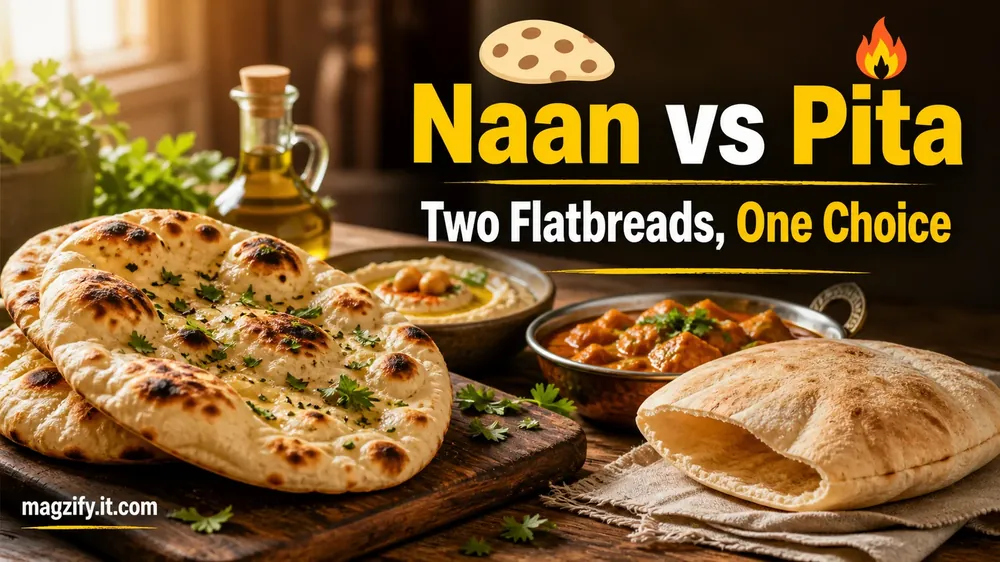
The core answer in naan vs pita is simple. Naan works best for dipping and soaking up sauce. Pita works best for pockets, wraps, and crisp chips. Naan is thicker, softer, and richer. Pita is denser, drier, and easier to stuff.
Choose naan for a soft, rich side. Choose pita when the bread must hold the meal together. Neither wins every dinner, so let the food on your plate make the call.
Naan vs pita at a glance
| Comparison | Naan | Pita |
|---|---|---|
| Shape | Usually oblong with browned, blistered spots | Usually round with two layers that can separate |
| Texture | Soft, fluffy, thick, and chewy | Dense, thin, slightly dry, and crisp outside |
| Flavor | Rich, buttery, and lightly tangy | Mild, toasty, and wheat-forward |
| Common ingredients | Flour, water, yeast, yogurt, and butter | Flour, water, yeast, and salt |
| Inside | Solid, soft crumb | Hollow pocket when properly baked |
| Best job | Tearing, dipping, and soaking up sauce | Stuffing, wrapping, and baking into chips |
| Good meal partners | Curry, dal, soup, and thick dips | Falafel, sliced meat, salad, and hummus |
| Pizza use | Thick, soft individual pizza base | Thin, crisp individual pizza base |
| Reheating style | Moist heat or a lightly buttered skillet | Dry skillet or oven |
| Fat content | Generally higher, including saturated fat | Generally lower in fat |
| Egg guidance | Check the recipe and package label | Traditional dough does not use eggs |
| Dairy guidance | Often contains yogurt and butter | Basic recipes do not require dairy |
Where naan and pita fit at dinner
Naan belongs beside rich, saucy food. Its thick crumb catches curry, dal, and soup without falling apart at once. Tear off a piece, fold it slightly, and use it like a tiny edible scoop.
Pita belongs around the filling. Its pocket can hold meat, vegetables, sauce, and salad in one neat package. That makes it useful for lunches and busy weeknights.
You do not need a history lesson to make the right choice. Follow the meal’s design. If the recipe expects bread on the side, naan often fits. If it expects food inside the bread, pita usually makes more sense.
Texture and taste
Naan is the softer and richer bread. It feels fluffy in the middle, with chewy edges and toasted spots. Butter and yogurt give it more richness than basic pita dough.
That soft surface is excellent with thick sauces. It bends around a bite instead of cracking. Warm naan can also feel more like a treat than a plain bread side.
Pita is thinner, firmer, and slightly drier. Its outside can become crisp when toasted. The inside may split into a pocket, giving you space for fillings.
That pocket is pita’s biggest advantage. Naan may fold, but it does not offer the same built-in compartment. Trying to stuff naan often ends with toppings escaping onto your shirt.
For texture alone, choose based on your craving:
- Pick naan for soft, fluffy, and chewy bread.
- Pick pita for firm bread with a useful pocket.
- Toast pita for extra crunch.
- Warm naan gently to protect its softness.
Ingredients: why they feel so different
Naan gets its richness from yogurt and butter. Those ingredients help explain its soft crumb, mild tang, and higher fat content. Some recipes and products may use other ingredients, so the package label remains the safest guide.
Basic pita dough is much leaner. It uses flour, water, yeast, and salt. Pita does not traditionally need eggs, butter, or yogurt to do its job.
The shorter ingredient list also helps pita bake differently. Strong heat creates steam between its layers. The dough expands, and the two sides pull apart. That leaves the hollow center used for sandwiches.
The pocket comes from steam, not a special filling. A pita may fail to open fully if its layers seal or tear. It can still work as flatbread, though stuffing it becomes harder.
Anyone avoiding dairy should check both packages. Naan commonly includes dairy. Pita often has a simpler formula, but store recipes can differ.
Which is healthier, naan or pita?
Pita is generally the leaner choice. Verified comparisons show naan is usually higher in fat and saturated fat. Its butter and yogurt help create that richer texture.
Calories, carbohydrates, and protein can change with size and recipe. A large pita may not match a small naan. Flavored versions can also include extra oil, cheese, or toppings.
Compare serving sizes before comparing labels. Look at the listed portion, then check fat, saturated fat, protein, and fiber. That gives you a fairer picture than judging two pieces of different sizes.
For a lighter lunch, pita often makes practical sense. It holds vegetables and protein without adding the buttery feel of naan. For curry night, naan can still be worth it. Food does not need to win a purity contest to belong on your plate.
The honest health verdict is narrow but useful: pita usually wins on fat, while calorie totals require a label check.
Best uses for naan vs pita
Choose naan when sauce is the main event. Its soft, thick surface can scoop up curry, dal, soup, hummus, or another thick dip. It also makes an easy base for a soft flatbread pizza.
Useful naan meals include:
- Curry with torn naan on the side
- Dal or thick soup with naan for dipping
- Naan topped with sauce and cheese
- Warm naan cut into pieces for a shared dip plate
Choose pita when you need structure. Split the pocket and add meat, falafel, vegetables, or chicken salad. You can also cut pita into wedges and bake them until crisp.
Useful pita meals include:
- Pita pockets filled with chicken salad
- Falafel, vegetables, and sauce inside pita
- Toasted pita wedges with hummus
- Thin pita pizzas with crisp edges
For one bread and two meals, pita can become lunch pockets and dinner chips. Naan can become a dinner side and next-day mini pizza. Both breads handle leftovers well when matched to the right job.
Cooking, toasting, and reheating
Warm naan with moisture and gentle heat. A skillet with a little butter can restore its soft texture. A damp paper towel also helps if you use a microwave. Without moisture, naan can become tough and leathery.
Warm pita with dry heat. A hot dry skillet or oven can refresh the outside without making the bread soggy. Keep an eye on it because thin bread can crisp fast.
If pita is already dry, stop fighting it. Cut it into wedges and turn it into chips. Add them to a dip plate or crumble them over a salad.
For packed lunches, keep wet fillings separate until mealtime. That protects pita from getting soggy. Naan is less suited to stuffed lunches, but it travels well as torn pieces beside a dip or stew.
The case for each bread
Naan
Naan’s biggest strength is pleasure. It is rich, chewy, and excellent with sauces.
Pros
- Soft and fluffy
- Rich, buttery flavor
- Excellent for dipping
- Strong base for mini pizzas
- Feels special beside a warm dinner
Cons
- Generally higher in fat
- Often contains dairy
- Too thick for a true pocket
- Can become tough when reheated without moisture
Pita
Pita’s biggest strength is function. It can hold lunch, become chips, or serve as a thin pizza base.
Pros
- Useful pocket for fillings
- Generally lower in fat
- Easy to toast until crisp
- Mild flavor works with many foods
- Better suited to portable meals
Cons
- Can taste dry
- Pocket may tear or stay closed
- Less rich than naan
- Wet fillings can make it soggy
It depends on what you are eating
There is no single winner in naan vs pita. Your meal, texture preference, and nutrition goals decide which bread earns a place in the cart.
Choose naan if:
- You are serving curry, dal, or soup.
- You want buttery, soft bread.
- You plan to tear and dip.
- You want a thick pizza base.
- You do not need a pocket.
Choose pita if:
- You are building a sandwich or wrap.
- You want a firmer bread.
- You plan to make crisp chips.
- You prefer a bread generally lower in fat.
- You need lunch that travels well.
You can substitute pita for naan when dipping. The result will be thinner, drier, and less rich, but it will still carry sauce. Warm it first for a softer bite.
Naan is a weaker substitute for pocket pita. You can fold it around fillings, but you cannot stuff it in the same way. Use less filling and treat it like an open wrap.
Sometimes neither bread is right. Choose a tortilla for a tight cold wrap. Choose lavash for a thin, wide roll. Use lettuce leaves when you want a crisp bread-free holder. The best choice is the one built for your dinner.
Frequently asked questions
Which is healthier, naan or pita?
Pita is usually the leaner option because naan generally contains more fat and saturated fat. Exact calories and nutrients vary by product size and recipe. Compare equal serving sizes on the labels. Whole-grain ingredients, fiber, toppings, and fillings also affect the full meal.
Are gyros made with pita or naan?
Gyro recipes typically call for pita rather than naan because pita is shaped for holding sliced fillings and sauce. Check the recipe before shopping, since some styles use flat pita without a clear pocket. Naan can hold similar toppings, but it creates a thicker and richer meal.
Can you substitute pita for naan?
Yes, pita can replace naan for dipping when that is what you have. Warm it first so it bends more easily. It will still taste drier and less buttery. The swap works beside curry or soup, but it will not copy naan’s thick, fluffy texture.
Does naan have eggs?
Naan ingredients vary by recipe and brand. Yogurt and butter are common, while other ingredients can change between products. Do not assume every package follows one formula. If you avoid eggs because of an allergy or diet, read the ingredient list and allergen statement before buying.
Is pita vegan?
Basic pita can be made from flour, water, yeast, and salt, with no eggs or dairy required. Store-bought products may use different recipes or processing aids. Check the package instead of relying on the bread’s name, especially if strict vegan ingredients matter to you.
Why does pita form a pocket?
Steam creates pita’s pocket. High heat causes moisture inside the dough to expand. The two layers pull apart as the bread puffs. After cooling, that open space remains. A pita that does not puff can still taste good, but it may be harder to stuff.
How should you reheat naan and pita?
Use moist, gentle heat for naan and dry heat for pita. Warm naan in a lightly buttered skillet or under a damp paper towel. Heat pita in a dry pan or oven to protect its texture. If pita is too stale, crisp it into chips instead.