In this article
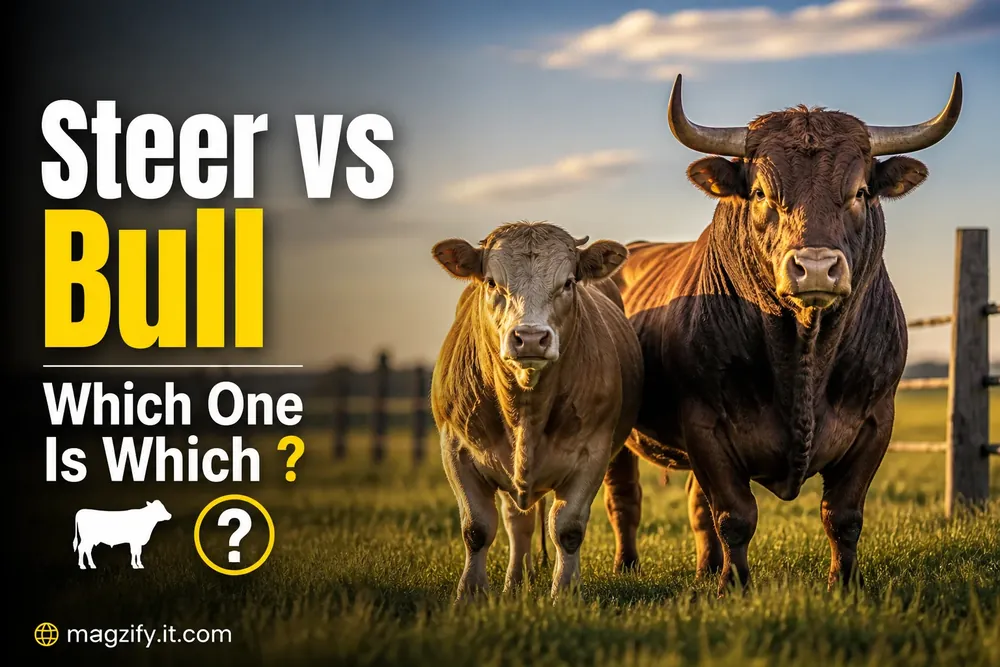
You’re at a farm open house. The farmer points toward two huge animals. “That’s the bull,” she says. “And that’s the steer.” They look similar, but one watches the fence while the other chews grass. In the bull vs steer comparison, one small biological difference changes almost everything.
A bull is an intact adult male bovine that can reproduce. A steer is a male bovine castrated before sexual maturity, so it cannot reproduce. Bulls are kept for breeding. Steers are calmer, easier to manage, and primarily raised for beef.
For most people, the steer is the better choice. It is calmer and safer to handle. A bull only wins when breeding is the goal.
Bull vs steer at a glance
| Criteria | Bull | Steer |
|---|---|---|
| Biological status | Intact adult male bovine | Male bovine castrated before sexual maturity |
| Reproduction | Can reproduce | Cannot reproduce |
| Main purpose | Breeding cattle | Beef production |
| Typical behavior | More aggressive and difficult to manage | Calmer and safer to handle |
| Body shape | Usually larger with heavier muscle | Usually less bulky than a bull |
| Farm experience needed | Experienced handling and careful management | Better suited to beginners and hobby farms |
| Place in the herd | Produces calves with breeding females | Lives without breeding the herd |
| Best choice for | A planned breeding program | Beef or a calmer pasture animal |
A bull is intact, while a steer is not
The main difference is reproductive ability. A bull remains intact, meaning he still has his reproductive organs. A steer was castrated before reaching sexual maturity.
That change means a bull can father calves. A steer cannot. It also helps explain their different builds, behavior, and farm roles.
You may hear people call both animals “male cows.” That works in casual conversation, but it is not precise. “Cattle” or “bovine” describes the wider animal group. Bull and steer describe two different kinds of male cattle.
Here is the easiest way to remember it:
- Bull: breeding male
- Steer: castrated male
- Cow: female that has had a calf
- Heifer: female that has not had a calf
Are steers calmer than bulls?
Yes. Steers are typically calmer than bulls and are safer to handle. Bulls can be aggressive, territorial, and difficult to manage.
That does not mean every steer is gentle. A large animal can hurt someone without meaning to. It also does not mean every bull charges on sight. Individual behavior varies.
Still, the broad pattern is clear: bulls demand more caution. A bull may watch people closely, challenge barriers, or react when the herd is nearby. A steer is more likely to settle into a routine.
If you visit a farm, use a simple plan:
- Stop before entering a field.
- Ask the farmer which animals are present.
- Let the farmer identify the bull or steer.
- Keep the distance they recommend.
- Never enter a cattle area without permission.
Curiosity is fine. Climbing a fence for a better look is not.
Size and muscle: bulls get the bulk
Bulls are usually larger and more muscular than steers. Their necks and shoulders often look thicker, giving them a powerful, front-heavy shape.
A steer can still become a very large animal. Castration does not turn cattle into small or harmless pets. The usual difference is in shape and muscle, not whether the animal seems big.
When viewing them from the side, compare these areas:
- The thickness of the neck
- The amount of muscle around the shoulders
- The overall bulk of the front half
- The animal’s stance and level of alertness
These clues can help, but body shape alone is not proof. Breed, age, health, and feeding can change how cattle look.
Reproduction decides the job
A bull’s main farm role is breeding. A steer cannot breed, so he is commonly raised for beef instead.
Keeping a bull only makes sense when a farm has a clear breeding plan. The animal must also be managed with suitable fencing, space, and handling skills.
A steer has a simpler role. He can share pasture without breeding the herd. That makes daily care easier for many small farms.
This is why size should not drive the choice. A bull may have more muscle, but purpose matters more than bulk. If no breeding is planned, the bull’s biggest advantage has little value.
Why the beef on your plate is probably from a steer
Steers are primarily raised for beef. Bulls are mainly kept for reproduction, although meat from a bull is still beef.
So, what is bull meat called? There is no special menu name. Meat from cattle is called beef, whether the animal was a bull, steer, cow, or heifer.
Farmers turn young males into steers for practical reasons:
- Steers cannot breed accidentally.
- They are usually calmer.
- They are safer and easier to manage.
- Their main purpose becomes beef production.
If you buy directly from a farm, ask what kind of animal produced the beef. “Was this from a steer or heifer?” is a normal question. You can then ask the farmer or butcher which cuts best match the meal you plan to cook.
Do not assume a label saying “beef” means bull meat. It only tells you the meat came from cattle.
Small farm choice: steer for beef, bull for breeding
For a hobby farm, choose a steer unless you need breeding. Bulls require more skill, stronger management, and constant respect.
A beginner should not choose a bull simply because it looks impressive. That impressive build comes with harder handling and greater risk.
A steer is usually the better fit when you want:
- An animal raised for beef
- A calmer pasture companion
- No unplanned breeding
- A more manageable introduction to cattle
A bull fits when you have:
- A real breeding program
- Suitable fencing and handling facilities
- Experience working with cattle
- A plan for keeping people and animals safe
If your only goal is to enjoy rural life, neither animal is a casual lawn ornament. Both need proper food, shelter, space, health care, and knowledgeable handling.
How to tell a bull from a steer
The clearest difference is physical: a bull has testicles, while a steer does not. You should never approach an animal closely just to check.
From a safe distance, look for supporting clues. A bull often has a thicker neck, heavier shoulders, and a more muscular front end. He may also appear more alert or focused on nearby people and cattle.
Use this safe identification routine:
- Ask the owner before approaching any field.
- Look from outside the fence.
- Check the neck and shoulder shape.
- Watch the animal’s behavior.
- Let the farmer confirm the answer.
Behavior is only a clue. A quiet bull is still a bull, and a nervous steer can still be dangerous.
The case for each animal
Why choose a bull?
A bull is the right animal when reproduction is the goal.
Bull advantages:
- Can breed with cows or heifers
- Usually has more muscle and bulk
- Has value within a planned breeding program
Bull drawbacks:
- More aggressive and difficult to manage
- Requires experienced handling
- Needs careful fencing and safety planning
- Is not the standard choice for beef production
Why choose a steer?
A steer is the practical choice for beef and easier handling.
Steer advantages:
- Typically calmer
- Safer and easier to manage
- Primarily raised for beef
- Better suited to many beginners and hobby farms
Steer drawbacks:
- Cannot reproduce
- Has no role in producing calves
- Still requires full-sized cattle facilities and care
The honest trade-off is simple. Bulls offer reproduction; steers offer manageability.
Sometimes you should choose neither
A bull or steer is not always the answer. Your goal should choose the animal, not the other way around.
If you want milk, look toward female cattle rather than a bull or steer. A cow has already had a calf. A heifer has not yet had one.
If you want an animal for pulling equipment, you may be thinking of an ox. An ox is a bovine trained for draft work, often a castrated male. “Ox” describes the job and training, not a separate cattle species.
You may also hear the word “stag.” A stag is a male bovine castrated after sexual maturity. It may keep more bull-like features even though it can no longer reproduce.
And if you have never handled livestock, starting with cattle may not be wise. Smaller animals can offer a gentler introduction to farm care.
So, which one wins?
It depends on the job, but the steer wins for most people. It is the better choice for beef, calmer handling, and a small farm without breeding plans.
The bull wins one important category: reproduction. There is no substitute when the herd needs calves. But that benefit comes with greater management demands.
Use this final check:
- Eating beef? Steer is the usual choice.
- Want a calmer pasture animal? Choose a steer.
- Planning to breed cattle? Choose a bull.
- New to cattle? Do not begin with a bull.
- Want milk or draft power? Choose neither.
Frequently asked questions
Can you eat a bull?
Yes. Meat from a bull is still called beef. Bulls are mainly kept for breeding, while steers are primarily raised for beef. The animal’s sex and farm role do not create a different everyday name for the meat. Ask the farmer or butcher if you want to know its source.
Why do we eat steers and not bulls?
Steers are calmer, safer to handle, and primarily raised for beef. Bulls are more aggressive and difficult to manage. They also have a separate farm role: breeding. Bull meat can be eaten, but farms usually keep bulls to produce calves rather than raise them as standard beef animals.
What is bull meat called?
Bull meat is called beef. There is no special common name that turns it into another type of meat. Beef is the general term for meat from cattle. If the animal’s sex matters to you, ask the farmer, butcher, or seller whether it came from a bull, steer, cow, or heifer.
Are steers calmer than bulls?
Yes, steers are typically calmer and safer to handle. Bulls are more likely to be aggressive and difficult to manage. Personality still varies from animal to animal. A calm-looking bull still needs respect, while a nervous steer can also cause harm because cattle are large and powerful.
Why do farmers turn bulls into steers?
Farmers castrate young males so they cannot reproduce and become easier to manage. The resulting steers are generally calmer and are primarily raised for beef. This also prevents unplanned breeding within the herd. Castration changes the animal’s farm role from a possible breeding male to a nonbreeding beef animal.
How can you tell a bull from a steer?
The most reliable physical difference is that a bull has testicles and a steer does not. From farther away, bulls often have thicker necks, heavier shoulders, and more muscle. Never enter a field or approach cattle to inspect them. Ask the owner to identify the animal instead.
What is the difference between a steer and an ox?
A steer is a male bovine castrated before sexual maturity. An ox is a bovine trained for draft work, such as pulling loads. Many oxen are castrated males, but the words describe different things. “Steer” describes biological status, while “ox” describes training and purpose.