In this article
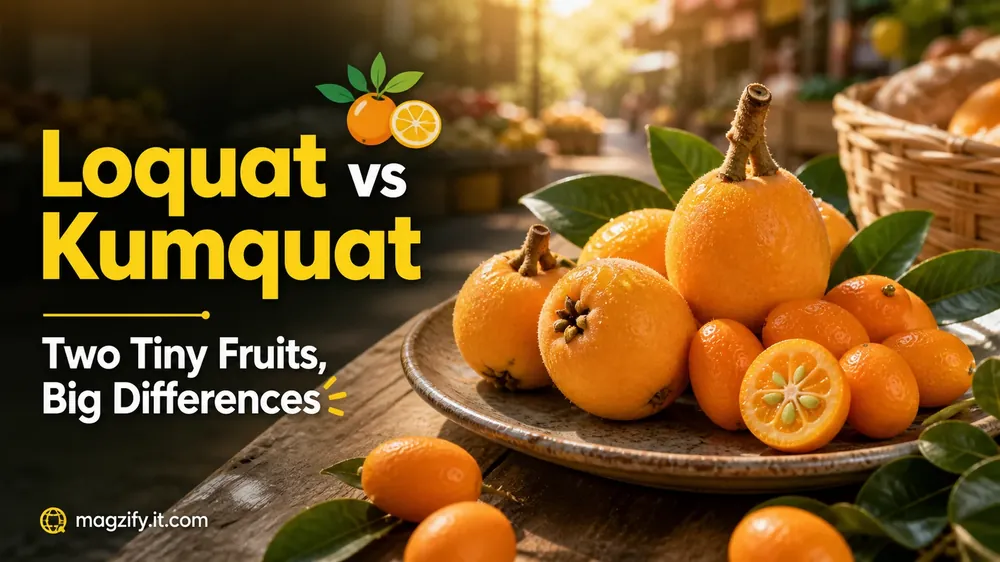
It’s Saturday morning at the farmers market. Two bins hold little orange fruits. One sign says loquats. The other says kumquats. They look like cousins, but they taste like strangers.
The loquat vs. kumquat choice is simple once you know the secret. Pick loquats for sweet, juicy snacking. Pick kumquats for a sharp citrus pop or homemade preserves. We get the confusion. Their names and colors are almost comically similar.
Choose the loquat for a soft, sweet, floral fruit. Choose the kumquat for a bold, sweet-tart citrus bite. They come from different plant families and play very different roles in the kitchen.
Loquat vs. kumquat at a glance
Loquats and kumquats are not related. Loquats belong to the rose family. Kumquats belong to the citrus family.
| What matters | Loquat | Kumquat |
|---|---|---|
| Plant family | Rosaceae, the rose family | Rutaceae, the citrus family |
| Scientific name | Eriobotrya japonica | Citrus japonica |
| Flavor | Sweet, mild, floral | Sweet peel with tart citrus flesh |
| Texture | Soft and juicy | Firm peel with little flesh |
| How to eat it | Remove the large seeds and eat the flesh | Eat the washed fruit whole; remove or spit out seeds |
| Best fresh experience | Gentle, juicy snack | Intense sweet-tart bite |
| Best kitchen use | Fresh dishes, jam, pies, crisps | Marmalade, liqueur, preserves |
| Plant form | Full tree that can reach 25 feet tall | Compact bush or small tree |
| Space needed | Yard space | Patio, small garden, or container |
| Availability | Most closely linked with spring abundance | Most closely linked with spring abundance |
| Shape | Usually teardrop-to-round, depending on variety | Often oval, though round varieties exist |
| Main drawback | Large seeds take up much of the fruit | Tart flesh can surprise new eaters |
The biggest loquat vs. kumquat difference
Kumquat is citrus; loquat is not. That one fact explains much of the difference.
Loquats belong to Rosaceae, better known as the rose family. This large plant family also includes familiar orchard fruits. Kumquats belong to Rutaceae, the family that contains citrus fruits.
That family split appears on the plate. A loquat has soft, juicy flesh and large, smooth seeds. A kumquat has a fragrant peel, little flesh, and a strong citrus bite.
The names cause more confusion than the fruits do. Put them side by side, take one bite, and the mystery disappears.
Loquat vs. kumquat taste
Loquat is the sweeter, gentler snack. Kumquat offers the louder flavor.
A ripe loquat is juicy and floral. Its sweetness feels soft rather than sugary. The flesh is tender, while the large brown seeds are smooth and firm. It is the fruit to choose when you want something refreshing.
A kumquat delivers a sweet-tart citrus punch. Its peel brings sweetness and fragrance. Its flesh brings the sour snap. Chewing both together creates the full flavor.
No, loquats do not taste like kumquats. The visual resemblance ends once you bite them.
| Taste trait | Loquat | Kumquat |
|---|---|---|
| Sweetness | Spread through the soft flesh | Concentrated in the peel |
| Tartness | Mild tang | Strong citrus tang in the flesh |
| Juiciness | Juicy and soft | Firm with minimal flesh |
| Aroma | Light and floral | Bright and citrusy |
| Overall experience | Calm, easy snacking | A bold flavor burst |
For hesitant eaters, loquat is the safer first pick. For sour-candy fans, kumquat is far more exciting.
How to eat loquats and kumquats
Eat kumquats whole, but remove loquat seeds. That is the practical rule.
Wash a kumquat, then bite into the whole fruit. The peel is part of the experience. Eating only the inside leaves you with its sourest part.
You can gently roll a kumquat between your fingers before eating it. This releases some of the fragrant oils in the peel. Remove visible seeds first or spit them out as you chew.
Loquats need more prep:
- Wash the fruit.
- Pull or twist away the stem.
- Open the fruit with your fingers or a small knife.
- Remove the large, glossy seeds.
- Eat the soft flesh.
The loquat skin is thin, but some people prefer peeling it. Try a bite before doing extra work.
Raw loquat is often the best loquat. Its juicy texture is most noticeable when the fruit is fresh.
Cooking and baking
Marmalade favors kumquat; pies favor loquat. Each fruit has a clear kitchen job.
Kumquats are especially good in marmalade and liqueur. Their edible peel carries strong citrus flavor. Slicing the whole fruit also spreads that flavor through preserves.
Kumquats can also brighten:
- Chutney
- Syrup
- Cocktail garnishes
- Savory sauces
- Fruit preserves
Loquats work better when you want soft fruit in a sweet dish. Their mild flavor fits crisps, pies, jam, fruit salads, and fresh salsa.
Good loquat uses include:
- Fresh fruit bowls
- Jam made for loquat’s softer texture
- Pies and crisps
- Green salads
- Sweet or spicy salsa
Do not treat these fruits as direct substitutes. A kumquat brings citrus peel and sharp acid. A loquat brings juicy flesh and floral sweetness. Swapping one for the other can change the whole dish.
If both look good, plan a two-fruit weekend. Make kumquat marmalade first. Then turn ripe loquats into a simple crisp. Each fruit gets to do what it does best.
Nutrition without the hype
Both fruits can add variety to your diet, but nutrition alone should not decide this match.
Serving sizes differ because the fruits are built differently. A kumquat is commonly eaten with its peel. A loquat contains large seeds that are removed. A simple weight-for-weight claim may not match what lands in your bowl.
The more useful question is whether you enjoy eating the fruit. Choose kumquat if its intense citrus taste makes fruit exciting. Choose loquat if its gentle sweetness helps you reach for fresh fruit.
Without verified figures for the same edible portion, neither fruit gets an honest nutrition win here. Taste, preparation, and availability are clearer ways to choose.
Growing a loquat tree vs. kumquat tree
Choose kumquat for a small space. Choose loquat when you want a real tree.
A loquat can grow up to 25 feet tall. That makes it a serious yard plant, not a casual windowsill project. Its broad leaves also give it a strong landscape presence.
Kumquats have a compact, bush-like habit. Their smaller footprint makes them easier to place on a patio or in a tight garden. They are the more practical option when every foot of space matters.
| Growing concern | Loquat tree | Kumquat plant |
|---|---|---|
| Mature form | Full-sized tree | Compact bush or small tree |
| Maximum verified height | Up to 25 feet | No verified height provided |
| Best setting | Open yard with room overhead | Patio, small garden, or container |
| Landscape role | Fruit tree and leafy focal point | Compact ornamental fruit plant |
| Main space concern | Can outgrow a tight planting spot | Container and root space still need attention |
Before planting either one, check local growing advice. Winter conditions vary by location, and exact cold tolerance can differ by variety.
Where to find them
Kumquats are usually the easier fruit to shop for. Loquats often feel like a local discovery.
Spring is the key overlap. Both fruits can be abundant in April, depending on the growing area and harvest. That is when you may see them together and wonder whether they are related.
Try these places:
- Farmers markets
- Specialty produce shops
- Asian grocery stores
- Local fruit stands
- Neighbors with productive trees
Do not judge ripeness by shape alone. Kumquat varieties can be oval or round. Loquats can range from teardrop-shaped to round. Color, feel, and the seller’s advice are more useful than a rigid shape rule.
Retail prices change by store, season, and location. Since no verified same-market prices are available here, price is not a fair deciding factor.
The case for each fruit
| Loquat strengths | Loquat drawbacks | Kumquat strengths | Kumquat drawbacks |
|---|---|---|---|
| Sweet, juicy flesh | Large seeds reduce the edible portion | Peel and flesh create layered flavor | Sour center can shock first-time eaters |
| Easygoing fresh flavor | Requires more prep than a kumquat | Whole-fruit eating is simple | Seeds can interrupt the bite |
| Useful in pies, crisps, and jam | Full tree needs yard space | Excellent for marmalade and liqueur | Minimal flesh limits juicy snacking |
| Strong choice for mild-fruit fans | Less suited to citrus recipes | Compact plant fits smaller spaces | Intense flavor is not universally loved |
The loquat makes the stronger everyday snack. The kumquat makes the stronger conversation starter.
When the right choice depends on you
Sweet snack means loquat. Citrus explosion means kumquat. Start there.
Choose a loquat when:
- You like mild, juicy fruit.
- You want fruit for a pie or crisp.
- You have room for a full tree.
- You find a good local harvest.
Choose a kumquat when:
- You enjoy tart citrus.
- You want to make marmalade or liqueur.
- You need a compact plant.
- You want a fruit that can be eaten whole.
Choose neither when the texture or flavor is wrong for your goal. A familiar peach may suit a soft fruit dessert better. A standard lemon may be easier for a citrus sauce. The smartest purchase is the fruit that fits your actual plan.
For most shoppers, the decision order is simple:
- Pick by taste first.
- Match the fruit to the recipe.
- Consider what is fresh and available.
- For planting, measure your space.
There is no overall winner in loquat vs. kumquat. Loquat wins the sweet-snack round. Kumquat wins the citrus-preserve round.
Frequently asked questions
Do loquats taste like kumquats?
No. Loquats are sweet, juicy, and floral, while kumquats are sharp and citrusy. A kumquat balances sweet peel against tart flesh. A loquat offers soft flesh with a much gentler tang. Their similar color and names create the confusion, not their flavor.
Can you eat loquats raw?
Yes. Fresh loquat is a great raw snack. Wash it, remove the stem, and open the fruit. Take out the large brown seeds before eating the flesh. The thin skin can be removed if you dislike its texture, though peeling every fruit adds extra work.
Can you eat kumquats raw?
Yes. Wash the kumquat and eat it whole. The peel is the sweet part, while the flesh supplies the tart citrus bite. Remove visible seeds or spit them out while chewing. Eating the peel and flesh together gives you the balanced flavor that makes kumquats unusual.
Why are loquats harder to find in stores?
Loquats are more closely tied to local harvests than national produce displays. Their brief spring abundance also narrows the shopping window. Farmers markets and specialty produce sellers are good places to look. You may also find them growing in yards where the climate suits the tree.
What is loquat fruit called in English?
Its standard English name is loquat. The fruit’s scientific name is *Eriobotrya japonica*. Some references and sellers may use other regional names, but loquat is the clearest term when shopping or searching for recipes. It also helps prevent confusion with kumquat, which is a citrus fruit.
Which is sweeter, loquat or kumquat?
Loquat tastes sweeter overall. Its soft flesh has a mild, easy sweetness. Kumquat peel is sweet, but the flesh is distinctly tart. That contrast makes kumquat feel brighter and more intense. Choose loquat for gentle sweetness and kumquat when you want sweet and sour in one bite.
Can I substitute loquats for kumquats in a recipe?
Usually not without changing the result. Loquat supplies soft, juicy flesh. Kumquat supplies tart citrus flavor and an edible peel. Use kumquat for citrus-forward preserves and loquat for soft fruit desserts. If you swap them, expect to adjust the recipe rather than making an equal substitution.